Sustainability
Less carbon. More concrete.
Cement is one of the largest single sources of industrial CO₂ on earth. Every ton of Portland cement a producer can responsibly replace is a direct, measurable reduction. MetaSphere lets ready-mix producers make that swap without changing how they batch.
of Portland cement replaced per cubic yard at our validated dosage
denser than powdered metakaolin, roughly a third of the delivery trips
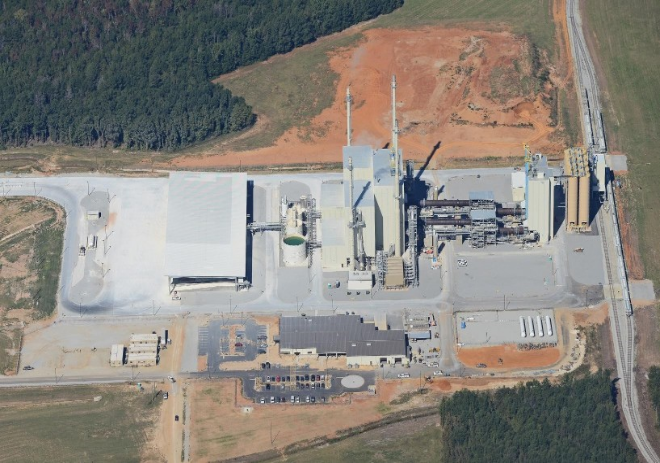
domestically mined and manufactured in Wrens, Georgia
The opportunity
Replacing cement is the highest-leverage move in the mix
In a typical concrete mix, cement is a small fraction of the mass but the overwhelming majority of the embodied carbon. That's why supplementary cementitious materials matter so much: displacing even 20% of cement moves the carbon number more than almost anything else a producer can do.
As fly ash and slag become harder to source, high-reactivity calcined clay is the supply that's actually scalable. MetaSphere makes it easy to adopt.
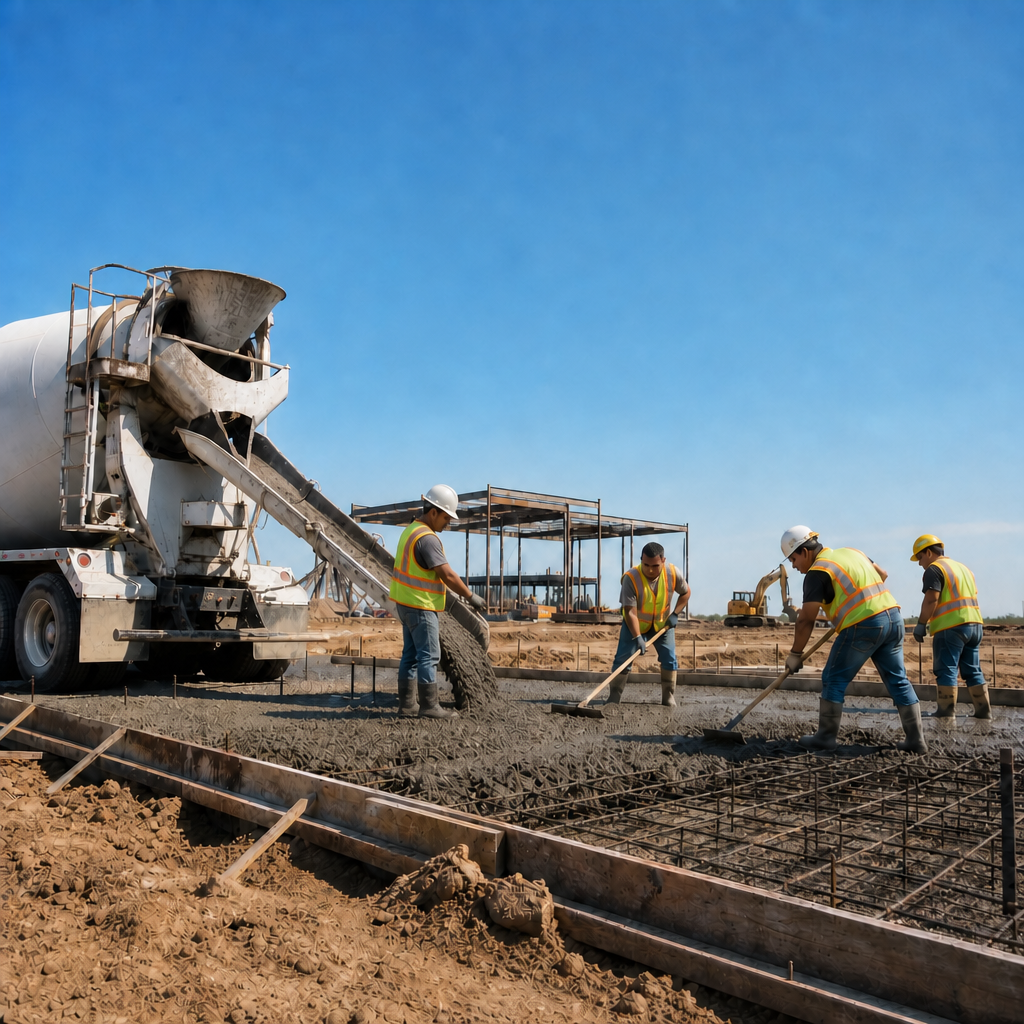
Lower carbon, cubic yard by cubic yard
Cutting the carbon of every yard of concrete
What matters is the finished concrete. Starting from the NRMCA 2019 industry benchmark of 261.21 kg CO₂e per cubic yard for a 4,000 psi mix, replacing a share of cement with MetaSphere measurably lowers the global warming potential of the pour.
At a 20% replacement rate, GWP drops to 230.4 kg CO₂e per yard, a 11.8% reduction. At 40% replacement, it falls to 199.9 kg CO₂e per yard, a 23.5% reduction from the same benchmark. Higher reactivity is what makes those replacement levels practical.
Those figures assume MetaSphere is the only SCM in the mix. Most plants run a blend, and that is where the numbers get considerably better. See the quaternary mix designs below.
Concrete GWP (kg CO₂e per cubic yard)
4,000 psi mix, MetaSphere as the only SCM
Reductions are calculated against the NRMCA 2019 benchmark for a 4,000 psi mix. Actual results vary with mix design, but the direction is consistent: more replacement, less carbon.
Real-world mix designs
Blend MetaSphere with slag and fly ash, and the reductions nearly double
Almost nobody runs a single SCM. In a quaternary blend, MetaSphere carries the reactivity that lets you push total cement replacement further than slag or fly ash could support on their own. Here is what that looks like on a 4,000 psi mix, cubic yard for cubic yard.
20% MetaSphere blend
163.6 kg CO₂e per cubic yard, down from 261.2
Cementitious blend
40% MetaSphere blend
133.0 kg CO₂e per cubic yard, down from 261.2
Cementitious blend
Full mix design, per cubic yard
Weights in lbs/yd, GWP in kg CO₂e. Total cementitious content is held at 608 lbs/yd across all three designs, so strength targets are met the same way.
| Item | Plant | Benchmark | 20% MetaSphere | 40% MetaSphere | |||
|---|---|---|---|---|---|---|---|
| lbs/yd | GWP | lbs/yd | GWP | lbs/yd | GWP | ||
| Portland cement | Clinchfield | 608 | 253.2 | 304 | 126.6 | 183 | 76.2 |
| Slag | — | — | 122 | 9.0 | 122 | 9.0 | |
| Fly ash | — | — | 60 | — | 60 | — | |
| MetaSphere | Wrens | — | — | 122 | 20.0 | 243 | 39.9 |
| Rock | Dolcito | 1,845 | 6.0 | 1,845 | 6.0 | 1,845 | 6.0 |
| Sand | Durbin | 1,175 | 2.0 | 1,175 | 2.0 | 1,175 | 2.0 |
| Water | 317 | 0.0 | 317 | 0.0 | 317 | 0.0 | |
| Total | 1 cu. yd. | 3,945 | 261.2 | 3,945 | 163.6 | 3,945 | 133.0 |
| GWP reduction vs. benchmark | 37.4% | 49.1% | |||||
Calculated in our EPD calculator against the NRMCA 2019 benchmark for a 4,000 psi mix. A dash means no GWP was allocated to that constituent in this calculation. Your own reductions will move with your cement source, local aggregate, and target strength, so we would rather run the numbers on your actual mix designs than have you rely on ours.
Why the sphere helps
The form factor is part of the sustainability story
MetaSphere doesn't just replace cement, its shape lowers the footprint of getting the material to your plant and keeps your yard cleaner while doing it.
Fewer delivery trips
At roughly 45 lb/ft³, MetaSphere is about three times denser than fine powder. More material per truck or railcar means fewer trips and lower transport emissions per ton delivered.
Low dust, cleaner air
Free-flowing beads generate a fraction of the airborne dust of powdered SCMs, better ambient air quality around the plant and a safer environment for the crew handling it.
Safer to handle
Less respirable dust means less exposure risk and less housekeeping. Worker safety and sustainability point in the same direction here.
Made in Georgia
A domestic supply chain, close to the work
MetaSphere is mined and manufactured in the United States, in Wrens, Georgia. Domestic production means a shorter, more transparent supply chain than imported SCMs, and resilient, predictable supply for producers across the Southeast and beyond.
Built on a 50+ year mineral-processing facility, revitalized with a $100M investment in modern calcination and densification capacity.
A scalable alternative to fly ash and slag as those legacy SCM supplies continue to tighten.
Put a real number on your mix
Request a sample and we'll help you model the carbon impact of replacing cement in your specific designs.